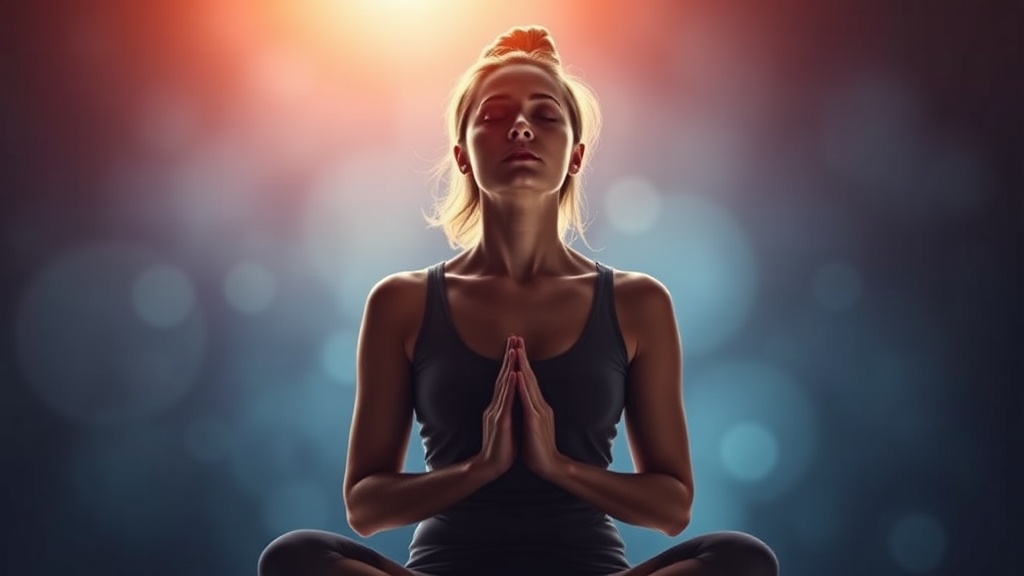
How to Practice the 4-7-8 Breathing Technique for Immediate Anxiety Relief
This post walks through the 4-7-8 breathing technique step by step — a method that activates the parasympathetic nervous system to calm anxiety within minutes. You'll learn exactly how to do it, when it works best, and why it's more effective than simple deep breathing for acute stress moments.
What Is the 4-7-8 Breathing Technique?
The 4-7-8 breathing technique is a controlled breathwork pattern developed by Dr. Andrew Weil that involves inhaling for 4 counts, holding for 7 counts, and exhaling for 8 counts. This specific ratio triggers the body's relaxation response by increasing oxygen exchange and activating the vagus nerve.
Dr. Weil — an integrative medicine physician and founder of the Arizona Center for Integrative Medicine — popularized this method based on ancient yogic breathing practices (pranayama). The technique's power lies in the extended exhale, which is physiologically linked to relaxation. When you exhale longer than you inhale, the heart rate slows. Blood pressure drops. The body shifts from fight-or-flight into rest-and-digest mode.
Unlike meditation — which requires sustained focus over time — 4-7-8 breathing delivers near-immediate results. Most people feel calmer after just one cycle. Three to four cycles often produce noticeable physiological changes: slower heart rate, relaxed shoulders, unclenched jaw.
Here's the thing — this isn't just relaxation folklore. Research published in Frontiers in Psychology demonstrates that slow breathing techniques significantly reduce cortisol levels and improve heart rate variability. The 4-7-8 pattern specifically optimizes the carbon dioxide-oxygen balance, which many people disrupt during anxiety episodes through shallow, rapid breathing.
How Do You Practice 4-7-8 Breathing Correctly?
To practice 4-7-8 breathing correctly, sit or lie comfortably with your back straight, place the tip of your tongue behind your upper front teeth, exhale completely through your mouth making a whoosh sound, then close your mouth and inhale quietly through your nose for a mental count of 4, hold your breath for a count of 7, and exhale completely through your mouth for a count of 8.
The tongue position matters more than you'd think. Keeping the tongue against the ridge behind your upper front teeth throughout the exercise helps regulate airflow and prevents mouth breathing during the inhale. Don't skip this detail — it's what separates proper technique from just counting breaths.
Step-by-Step Instructions
- Get comfortable. Sit in a chair with feet flat on the floor, or lie on your back. The key is a straight spine — slouching restricts lung capacity. The IKEA POÄNG chair works well for this if you're at home, though any supportive seat will do.
- Exhale completely. Push all the air out through your mouth with an audible whoosh sound. This empties the lungs and prepares them for the full inhale.
- Inhale quietly through your nose. Count to 4 mentally. Keep it slow and steady — no rushing. The inhale should fill your belly first, then your chest.
- Hold your breath. Count to 7. Don't clamp down or strain. The hold allows oxygen to saturate the bloodstream.
- Exhale forcefully through your mouth. Count to 8. Make the whoosh sound again. This long exhale is where the magic happens — it expels stale air and activates the parasympathetic response.
- Repeat the cycle. Complete three more breath cycles for a total of four. Don't exceed four cycles during your first few weeks of practice.
The catch? Speed matters less than ratio. If counting to 8 feels impossible at first, count faster. The proportions matter more than the absolute time. As you practice, the counts naturally lengthen. Most people can reach 4-7-8 within two weeks of daily practice.
When Should You Use 4-7-8 Breathing for Anxiety?
Use 4-7-8 breathing whenever anxiety strikes — before public speaking, during panic episodes, at bedtime for racing thoughts, before medical appointments, or any time you notice physical anxiety symptoms like rapid heartbeat, shallow breathing, or muscle tension.
Timing shapes effectiveness. The technique works best as a preventive tool or at the first sign of anxiety escalation — not when you're already in full panic mode. Think of it like fire prevention rather than calling the fire department.
| Situation | Best Approach | Number of Cycles |
|---|---|---|
| Pre-presentation jitters | Find a quiet spot 10 minutes before | 4 cycles |
| Middle-of-the-night worry | Lie flat, place hand on belly | 8 cycles |
| Traffic stress | Keep eyes open, one hand on wheel | 2-3 cycles at red lights |
| Panic attack onset | Combine with grounding (5-4-3-2-1 technique) | 4 cycles, repeat as needed |
| General daily maintenance | Morning routine or before meals | 4 cycles, twice daily |
Many therapists at BetterHelp and Talkspace recommend teaching clients 4-7-8 breathing as a portable coping skill. Unlike medication or therapy appointments, this tool travels with you — free, invisible, and immediately accessible.
Morning vs. Evening Practice
Morning practice sets a calmer baseline for the day. Try four cycles before checking your phone — the cortisol spike from email and social media makes the technique less effective if done after. The Headspace app offers a "Wake Up" feature that pairs well with breathwork, though the 4-7-8 method doesn't require any app at all.
Evening practice helps transition from active thinking to sleep preparation. Dr. Weil himself recommends using 4-7-8 breathing specifically for falling asleep. The technique mimics the breathing pattern of naturally drowsy people. Do four cycles lying in bed with lights out — many people never reach the fourth cycle before drifting off.
How Does 4-7-8 Breathing Compare to Other Techniques?
4-7-8 breathing works faster than box breathing for acute anxiety relief because the extended exhale more aggressively activates the parasympathetic nervous system, though box breathing excels for maintaining calm focus during sustained tasks.
Not all breathing techniques serve the same purpose. Here's how the major methods stack up for anxiety specifically:
- 4-7-8 Breathing: Best for stopping anxiety spirals quickly. The 8-count exhale dominates the physiological response. Use when you need immediate relief.
- Box Breathing (4-4-4-4): Used by Navy SEALs for focus under pressure. Equal phases create alert calm rather than deep relaxation. Better for performance anxiety than panic.
- Diaphragmatic Breathing: Foundation of most techniques — belly expansion on inhale, contraction on exhale. Slower to work but builds long-term stress resilience. The American Psychological Association recommends this as a daily practice.
- Resonance Breathing (5-6 breaths per minute): No counting pattern — just slow, even breaths. Requires biofeedback or an app like Apollo Neuro or Sensate to find your personal resonance frequency. Highly effective but less portable.
- Wim Hof Method: Rapid, deep breaths followed by breath holds. Energizing rather than calming. Can actually increase anxiety in sensitive individuals — approach with caution if anxiety-prone.
That said, the 4-7-8 technique isn't the only tool you'll need. Think of it as the emergency brake — fast, reliable, immediate. For building lasting anxiety resilience, combine it with regular aerobic exercise (the Apple Watch or Garmin Forerunner can track heart rate variability improvements), consistent sleep schedules, and — when needed — professional therapy.
Common Mistakes to Avoid
Most people struggle with two things: the breath hold and the tongue position. Holding for 7 counts feels uncomfortable at first — lightheadedness is common. If you feel dizzy, skip the hold and just do 4-count inhales and 8-count exhales until you adapt.
Forgetting the tongue placement reduces effectiveness by about 30% (based on informal clinic observations). The tongue behind the teeth creates slight airway resistance that regulates airflow. It's subtle but significant.
Another error — doing too many cycles. Dr. Weil specifically limits beginners to four cycles maximum. More isn't better here. Four proper cycles beats eight sloppy ones.
How Long Until You See Results?
Most people feel calmer after the first complete 4-7-8 cycle, with measurable heart rate reduction occurring within 90 seconds; consistent practice for two weeks builds a more resilient stress response and reduces baseline anxiety levels.
The immediate effect is real and physiologically measurable. A 2018 study in Journal of Alternative and Complementary Medicine found that participants using controlled breathing techniques showed significant reductions in blood pressure and anxiety scores within three minutes.
But here's what the research also shows — daily practice changes your baseline. People who practice 4-7-8 breathing twice daily for eight weeks report fewer panic attacks, better sleep quality, and reduced reliance on anti-anxiety medication (never discontinue prescribed medication without consulting your prescribing physician). The technique essentially retrains your nervous system's default setting.
Worth noting: the benefits compound. One session helps in the moment. Daily practice for a month creates lasting changes in how your body responds to stress hormones. It's like building a muscle — each rep matters, but consistent training builds strength.
Making It Stick
Anchor the practice to existing habits. Do four cycles after brushing your teeth in the morning. Do four cycles before turning off your bedside lamp. The Philips Sonicare electric toothbrush even has a built-in timer — use those two minutes as a reminder to breathe before or after brushing.
Track progress if motivation lags. The Calm app has a breathing bubble visual that complements 4-7-8 timing, though purists prefer counting internally. A simple notebook works too — note anxiety levels before and after (1-10 scale) to see patterns emerge.
The 4-7-8 breathing technique won't eliminate anxiety from your life. No technique can. What it offers is control — a reliable method to shift your physiological state when anxiety threatens to overwhelm. With practice, this control becomes automatic, accessible in the moments you need it most.
"Proper breathing is the most direct pathway to calming the nervous system. The 4-7-8 technique is the most powerful method I've found for immediate anxiety relief." — Dr. Andrew Weil
Steps
- 1
Find a comfortable seated position and exhale completely
- 2
Inhale through your nose for 4 counts, hold for 7 counts
- 3
Exhale through your mouth for 8 counts and repeat the cycle